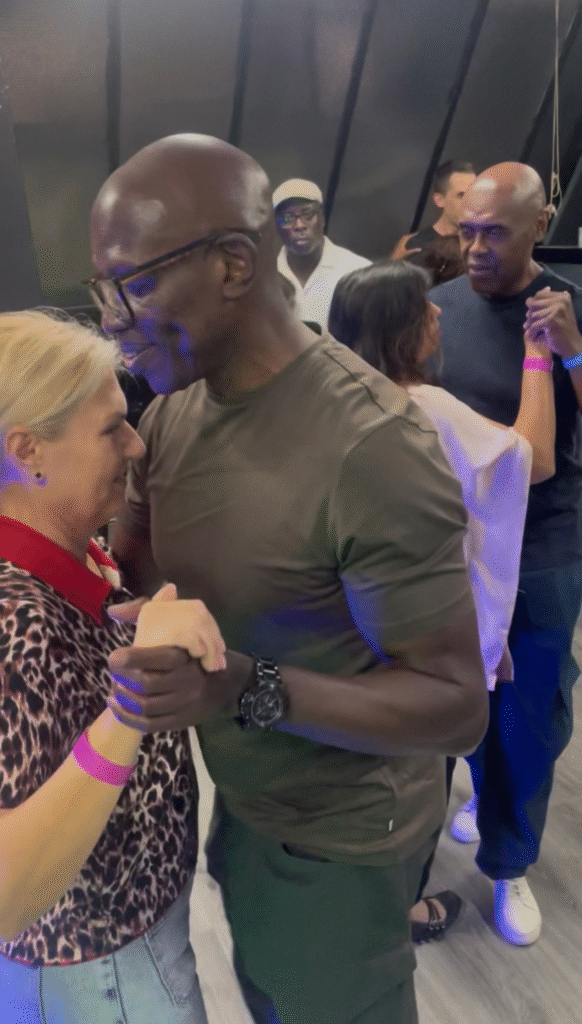

A while ago I asked a simple question on my Facebook page, and it turned into one of the biggest conversations our community has ever had: **more than 260 comments** from dancers across the UK and beyond.
The question came from conversations I’d had with dancers from the salsa and bachata scenes. Many of them told me they felt frustrated, and sometimes unwelcome, when they tried Kizomba and Urban Kiz socials. Here’s why, what our community said, and what we can all do to make our dance floors friendlier.
## The question: why don’t Kizomba dancers rotate?
In salsa and bachata, dancers usually change partners after each song, so everyone gets to dance with lots of different people in one night.
In Kizomba it’s common to stay with the same partner for **five or six songs**, and in Urban Kiz sometimes **ten to fifteen**. At festivals and parties, where there are often more followers than leaders, that means fewer people get to dance. Newcomers can end up sitting on the side for hours, lose interest, and never come back. That slows down the growth of our scene, in the UK and elsewhere.
So I asked: **how can we make our culture more welcoming and inclusive, while still letting everyone enjoy the dance the way they love it?**
## Why dancers stay together: the connection
Many dancers explained that it’s not about being unfriendly, it’s about **connection**.
– Several people said that in Kizomba and Urban Kiz, connection takes **time to build**. You’re adjusting to a new partner’s body, timing and style, and it takes a moment to feel comfortable being that close to someone new. When that connection finally clicks, people want to **savour it** and explore it, not drop it after one song.
– Others pointed out that the music is different too. Kizomba tracks are often shorter and more intimate than salsa tracks, and one song doesn’t always feel like enough to really “arrive” in the dance.
That’s a fair point. The beauty of Kizomba *is* the connection.
## The other side: how it feels to be left out
But many other dancers shared how it feels from the edge of the dance floor:
– **A new leader** described traveling long distances just to find beginner classes, then feeling at London socials that some followers saw dancing with him as a burden because he was still learning. He said the feeling of being made to feel small stayed with him, and could easily put off someone less determined.
– **An experienced follower** shared that she has often waited a long time for a dance, received unkind “no’s”, or been told “later”, only to watch the leader ask someone younger sitting next to her. She now prefers events with a friendlier, more mixed atmosphere.
– **A leader** asked a powerful question: if he pays for a festival and the most experienced dancers hold onto each other for 40 minutes, should he do the same, or be the change he wants to see? His answer: **growing the scene and dancing with newcomers should be a shared goal.**
– One dancer went further, arguing that dancing exclusively with one person for 30 to 60 minutes isn’t really “social” dancing any more.
Reading these comments really touched me, because I’ve seen this happen at our own events…
## Ideas from our community
The best part of the discussion was the solutions people suggested:
– **Teach etiquette in class.** Several dancers felt that social dance etiquette, including dancing with everyone, young and old, beginner and advanced, should be taught from Level 1.
– **Teachers lead by example.** Dancers love it when teachers at socials and festivals dance with all levels, not just their friends. It builds beginners’ confidence enormously.
– **Followers can ask too.** Many said that leaders like to be asked as well, and that both followers and leaders should feel free to invite each other.
– **Ice-breaker games.** One dancer from a Lindy Hop background described the “snowball”: the DJ calls “snowball!” and everyone changes partner. It’s random, fun, and nobody feels judged.
– **Mixed and “one song at a time” parties.** A teacher from abroad shared that their scene was struggling, so they started parties where the DJ plays one song, pauses, then starts the next, mixed with bachata. Within months, new and younger dancers were discovering Kizomba in a relaxed way. Their conclusion: **you need both.** Full Kizomba parties help dancers develop deep skills and connection, and mixed parties are the welcoming front door for newcomers.
## My view as a teacher and organiser
Share your own opinion in 4–6 sentences, e.g.:
I prefer that there are more rotation happening throughout the evening, so in my school we implanted the switch system which mean all dancers for 30 minutes of the night rotate setting the tone of the evening, we also the teachers dance with the students.
In Palop culture followers don’t ask for dances but being in Europe I do encourage my followers to ask we are in Europe and I am adapting to the environment.
I believe in sharing ourselves with everyone higher & lower after dancing is to be shared to create a lovely community where everyone feels included.
## Tips if you’re new to Kizomba socials
If you’re a beginner, here’s how to feel more at home on the dance floor:
1. **Come to a social linked to your class.** At socials after classes, you’ll already know faces, and teachers and classmates are more likely to dance with you.
2. **Don’t take a “no” personally.** People say no for all sorts of reasons: they’re tired, thirsty, or have promised the next dance to someone else.
3. **One or two songs is perfect** when dancing with someone new.
4. **Stay for at least 30 minutes.** The first few dances are always the hardest, and it gets easier quickly.
## Tips for experienced dancers
– **Dance with at least one beginner every night.** You remember how it felt when someone took a chance on you.
– **Mix it up.** Enjoy your long, connected dances with your favourite partners, and also make space for others.
– **Be kind when you say no**, and if you say “later”, mean it.
– **Notice who’s been sitting down for a while.** One invitation can decide whether someone comes back next week.
## Let’s build a welcoming scene together
Kizomba is about connection, and connection starts with a simple invitation to dance. Whether you love long, deep dances or prefer to rotate, there’s room for both, as long as nobody is left behind.
If you’re new and want to start in a friendly environment, join us at our **Kizomba Thursdays at Casa Ritmo, Elephant & Castle**: classes for 4 levels followed by a social where beginners are always welcome.
👉 **Book your Kizomba Thursday : https://gingaboo.com/events/kizomba-london-thursday/ **
Want to know more? Read our **[Etiquette in the Kizomba Dance Scene(https://gingaboo.com/etiquettekizombadance/ , our **[Complete Beginner’s Guide https://gingaboo.com/kizomba-classes-in-london-a-complete-beginners-guide/ and our Beginners FAQ](https://gingaboo.com/ginga-boo-faq/
**What do you think?** Should Kizomba dancers rotate more, or is the long connection what makes the dance special? Share your thoughts on our Facebook page. The conversation continues! 💬